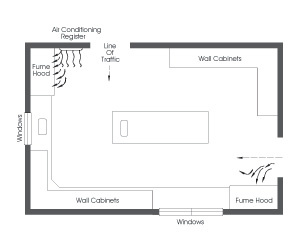
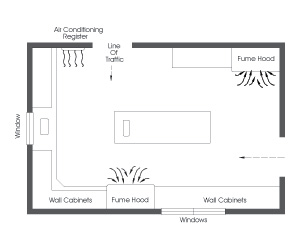
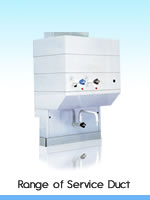
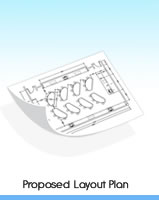
After proper usage, lining, counter top, and service fitting selections are made, fume hood location in the laboratory is decided. The decision should be based on easy access to pipe and duct service connections, and the work environment including traffic flow, interruptions, and whether the air conditioning is designed into the building system air handling capability. Another consideration is the possibility of adding another fume hood unit at a later date.
Draft patterns included into the laboratory by door and window openings or air conditioning registers sometimes have serious effects on laboratory fume hood performance. Laboratory fume hood exhaust is often used as part of a properly functioning air handling system for the building as a constant exhaust. In this type of application, the fume hood exhaust blowers should be in continual operation.
It is recommended that each fume hood have its own individual exhaust duct system and fume hood blower. The preferred blower location is the exterior of the building at the discharge end of the duct system. Independent research, unless closely monitored, utilizing a common duct system for a number of fume hoods often has serious consequences.
The proper design of the duct system in terms of size, length, velocities and types of materials employed should be evaluated by you and your engineer during the planning stages. Duct life, type of exhaust contaminates to be handles, ease of fabrication, cost and longevity are also areas of importance.
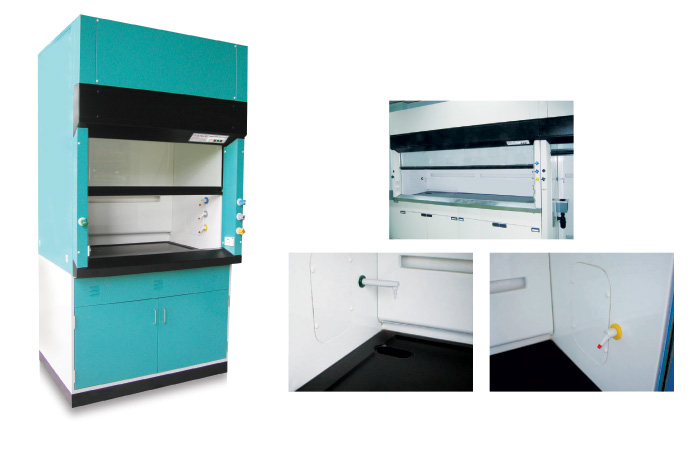
Hood safety procedure operations are points of consideration. Proper maintenance of sash assemblies, baffle hardware, and service fixtures including their ease in maintenance and replacement are points to consider in the location of fume hoods within the laboratory.
There are no mysteries in proper and safe fume hood installations. Only by consideration of all factors involved and efficient planning for the future can the inherent qualities if the fume hood be utilized to their fullest potential. |